Humanoid Robots 2026: Optimus, Figure 02, AgiBot, Unitree — Who Leads the Market
A 2026 status roundup of humanoid robots — Tesla Optimus, Figure 02, AgiBot X2, Unitree H1/G1: specs, prices, Thailand readiness, and where the industry is headed
TL;DR Humanoid Robot 2026
2026 is a major turning point for the humanoid robot industry: the market is going genuinely commercial, prices are dropping fast, and China and the US are competing fiercely.
See the Humanoid Robot category overview and get to know each of the brands mentioned in this article.
Current market leaders:
- 🇺🇸 Tesla Optimus — used in Tesla’s own factories (Gen 2 already deployed, Gen 3 planned for 2026–2027); target price USD 20,000–30,000
- 🇺🇸 Figure 02 — used at BMW Spartanburg, with an OpenAI partnership
- 🇺🇸 Boston Dynamics Atlas — switched to all-electric in 2024, partnered with Hyundai
- 🇨🇳 Unitree H1, G1 — the cheapest available, with the G1 at USD 16,000, putting humanoids within reach
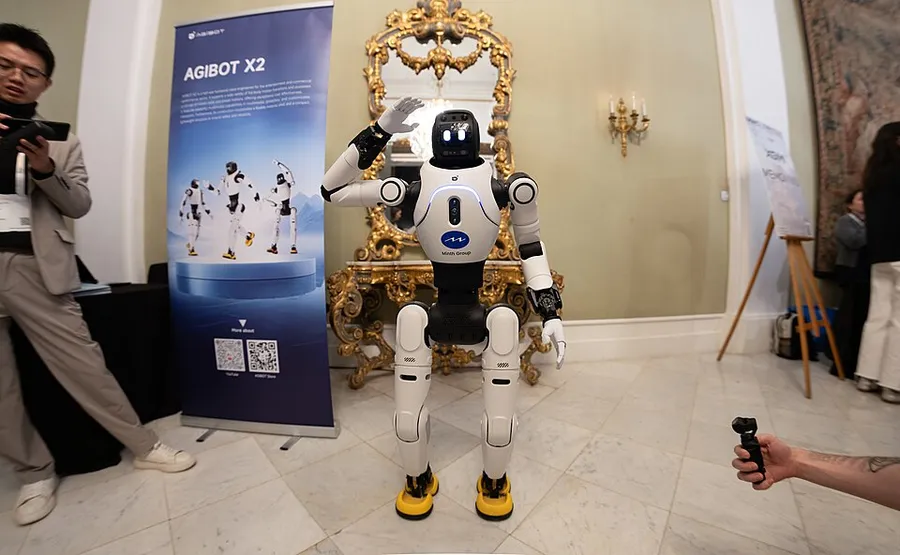
- 🇨🇳 AgiBot X2, A2 — demonstrated at MWC and CES 2026
- 🇨🇳 UBTech Walker S2 — used in Geely and BYD factories
Status in Thailand: still early stage, imported mainly for R&D and demonstrations, with no large-scale production deployment yet.
Who Are the Main Players in Humanoid Robots
🇺🇸 Tesla Optimus
The Tesla Optimus Gen 2 (unveiled in late 2023) has 28 actuators, weighs ~57 kg, can lift 20 kg, and runs on a battery for ~8 hours. The Gen 3 that Tesla has planned for around 2026 has no official specs yet, but is expected to be lighter with more actuators.
Current status:
- Used in the Gigafactory Texas and Fremont factories
- Tesla AI Day 2025 demonstrated complex multi-step tasks (sorting items, unpacking boxes, driving)
- Goal to scale production to 1 million units per year by 2030
Strengths: An end-to-end neural network derived from FSD (autonomous driving), and the lowest target price in the industrial class.
🇺🇸 Figure AI Figure 02
Figure 02 was unveiled in late 2024 and deployed at the BMW Spartanburg plant in 2025, performing body-in-white assembly.
Current status:
- BMW partnership: dozens of units deployed at Spartanburg in 2025 (with a plan for 100+ units by 2026, per Figure’s announcement)
- OpenAI partnership: voice AI for task understanding
- Latest funding round: USD 1.5B in 2025 at a USD 39.5B valuation
Strengths: A Vision-Language-Action (VLA) model built in-house by Figure, working on real automotive lines.
See details for the Figure AI brand.
🇺🇸 Boston Dynamics Atlas
Boston Dynamics retired the hydraulic Atlas (the gray one) in April 2024 and unveiled a new all-electric Atlas in gray-blue, with a greater range of motion than a human.
Current status:
- Parent company Hyundai is investing to deploy it in automotive factories
- TRI (Toyota Research Institute) is co-developing the behavior model
- Not yet on commercial sale; estimated price USD 100,000+
Strengths: Research-grade range of motion and balance control, capable of the hardest movements on the market.
See details for the Boston Dynamics brand.
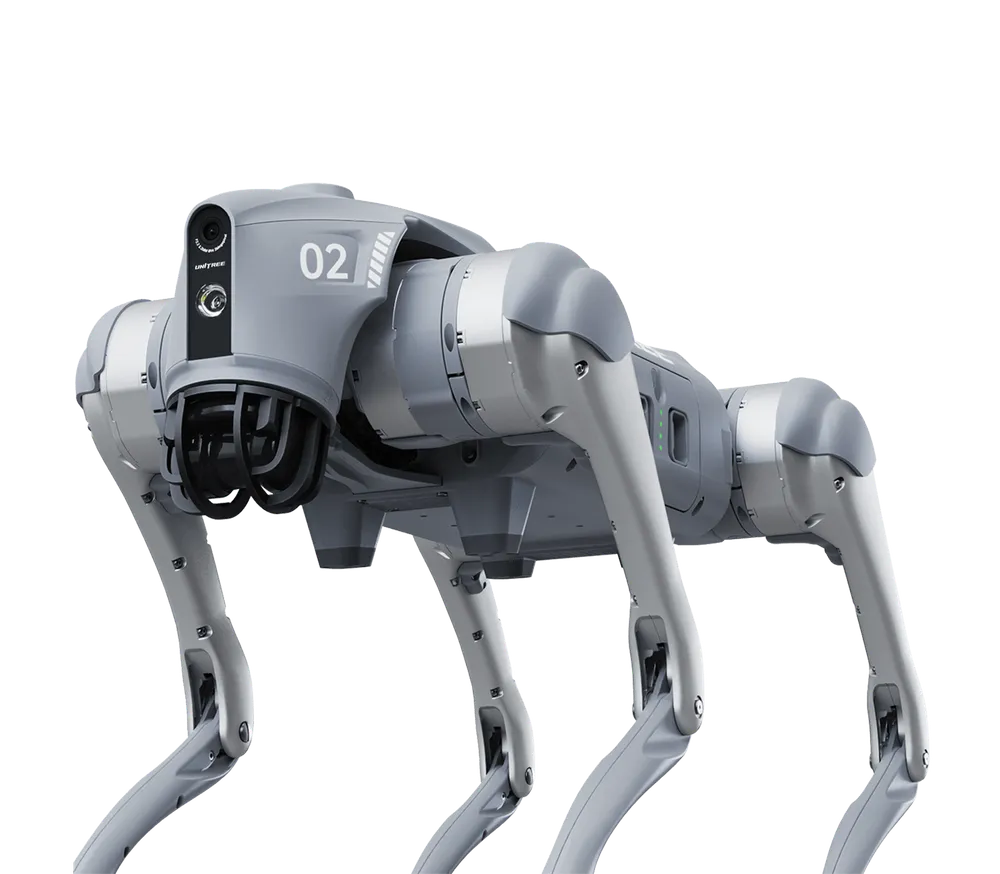
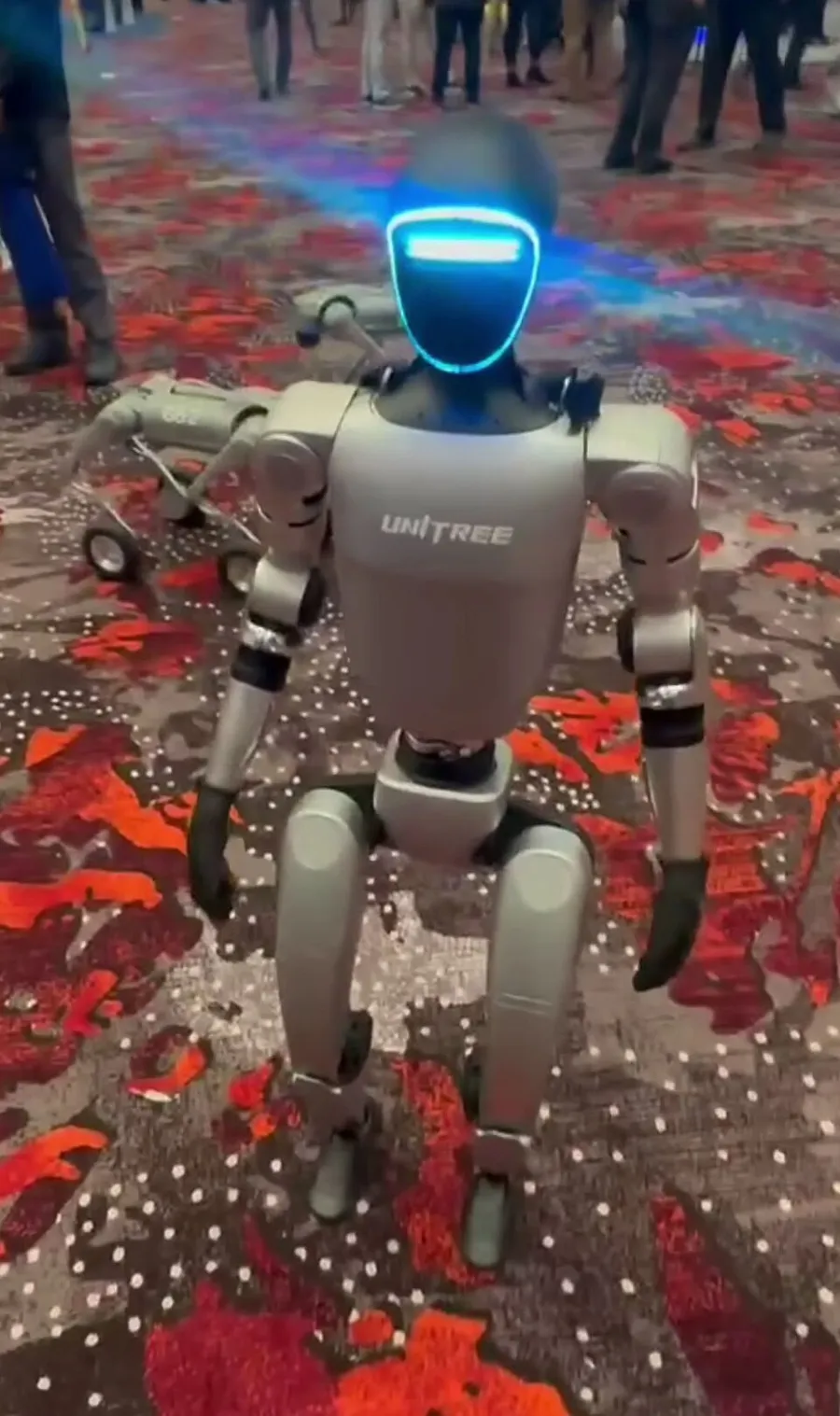
🇨🇳 Unitree H1, G1
Unitree (Shenzhen) changed the game in the humanoid market with accessible pricing:
- Unitree H1 (2024): 1.8 m tall, 47 kg, 1–2 hour battery, priced at USD 90,000 (~3.3 million baht)
- Unitree G1 (2024): 1.32 m tall, 35 kg, priced at USD 16,000 (~600,000 baht) — the cheapest humanoid on the market
Current status:
- Bought and used by universities and R&D teams worldwide
- Still mostly a research model, not designed for heavy industrial work
- Comes with an open SDK, making it easy for researchers to build on
See details for the Unitree brand.
🇨🇳 AgiBot X2, A2
AgiBot (founded by Peng Zhihui, a former Huawei “Genius Youth”) unveiled the X2 at MWC 2026 and the A2 series for warehouse work.
Current status:
- Demonstrated on Geely’s factory line
- AgiBot World, the largest open-source dataset in the field
- 2025 funding round: USD 700M at a USD 10B valuation
Strengths: A Vision-Language-Action model, a large dataset, and a reasonable price of USD 100,000–150,000.
See details for the AgiBot brand.
🇨🇳 UBTech Walker S2
UBTech (Shenzhen) focuses on industrial humanoids and educational robots.
Current status:
- Walker S2 used in Geely, BYD, NIO, and Foxconn factories
- Listed on the HKEX in 2023 (HKEX: 9880)
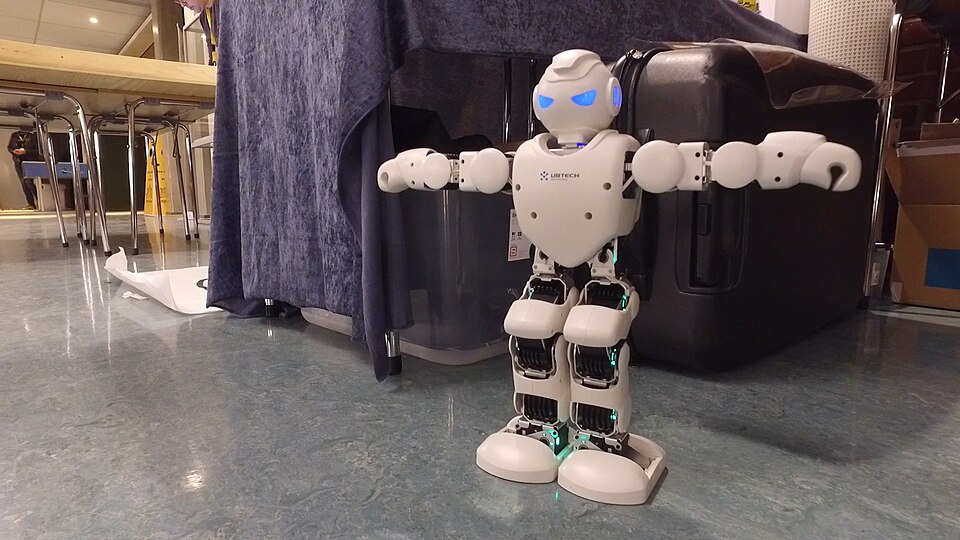
- The Alpha model for secondary and university education
Strengths: More deployment experience across multiple Chinese factories than anyone else in China.
Other Notable Players
- 1X Technologies (Norway–US): NEO Beta for home use
- Apptronik (US): Apollo for logistics
- Agility Robotics (US): Digit, used in Amazon and Spanx warehouses
- XPeng Robotics (China): Iron, from the EV automaker
- Sanctuary AI (Canada): Phoenix, with an AGI focus
Comparing the Leading Humanoid Robots of 2026
| Model | Height | Weight | Payload | Price (USD) | Status |
|---|---|---|---|---|---|
| Tesla Optimus (Gen 2/3 mix) | 173 cm | 57 to 73 kg | 20 kg | 20K to 30K (target) | Internal use |
| Figure 02 | 168 cm | 70 kg | 25 kg | TBD | BMW deployment |
| Boston Dynamics Atlas | 150 cm | 89 kg | 11 kg | TBD | Pilot only |
| Unitree H1 | 180 cm | 47 kg | N/A | 90,000 | Research |
| Unitree G1 | 132 cm | 35 kg | N/A | 16,000 | Research |
| AgiBot A2 | 175 cm | 65 kg | 20 kg | 100K to 150K | Pilot |
| UBTech Walker S2 | 175 cm | 76 kg | 15 kg | TBD | Geely/BYD |
| 1X NEO Beta | 167 cm | 30 kg | N/A | TBD | Home pilot |
How Humanoid Robots Work
A humanoid robot has four main systems:
1. Hardware
- Actuators/motors at 25–30 joints, using harmonic drives or planetary gearboxes
- Sensors — stereo 3D cameras, an IMU, and force/torque sensors in the hands and feet
- Battery — Li-ion 1.5–2.5 kWh, running 1–8 hours
- Compute — an edge GPU (NVIDIA Jetson Orin or AGX Thor)
2. Locomotion
The system that keeps balance while walking, running, sitting, and standing, using Model Predictive Control (MPC) or Reinforcement Learning (RL).
In 2026 most robots use RL-based locomotion trained in simulation (Isaac Sim, MuJoCo), then transferred sim-to-real.
3. Manipulation
Arms and hands perform fine work — picking up small objects, fitting lids, opening bags — using a Vision-Language-Action (VLA) model.
Examples: Figure uses the Helix VLA, Tesla uses an FSD-derived neural net, and Physical Intelligence (PI) uses the π0 model.
4. Brain / AI
An LLM + VLM + VLA stack that lets the robot understand natural-language commands and work continuously:
- Speech to text (e.g. Whisper)
- LLM understanding (GPT-4, Claude, Llama)
- A VLA model for action generation
- Voice synthesis output
See details in the Humanoid Robot category.
Humanoid Robots in Thailand
In 2026, humanoid robots in Thailand are still in the early adoption phase. The main users are:
1. University R&D
- Chulalongkorn University, KMUTNB, and KMUTT have imported the Unitree H1/G1 for research
- Robotics conferences in Thailand use Unitree and AgiBot for demonstrations
2. Marketing Events
- Major malls use humanoid robots to launch events, such as Siam Paragon and ICONSIAM
- At exhibition and event-marketing booths, robots draw crowds effectively
3. Pilots at Technology Organizations
- Large EV and tech companies are running pilots in their R&D centers
- There is still no production deployment on real manufacturing lines
Import prices for bringing humanoid robots into Thailand:
- Unitree G1: ~700,000 to 900,000 baht (including tax)
- Unitree H1: ~3.5 to 4.2 million baht
- AgiBot A2: ~4 to 6 million baht
Market Direction, 2026 to 2030
What Will Happen in 2026
- Prices drop fast: from USD 90,000 → USD 30,000 within 2 years
- Industrial deployment scales up: Figure 02 at BMW, Optimus at Tesla, and Atlas at Hyundai grow to hundreds or thousands of units
- VLA models become a commodity: open-source VLA models begin to spread (e.g. OpenVLA, π0)
- Battery and actuator improvements: more than 8 hours of runtime per charge
What to Watch, 2027–2030
- Home humanoids: the 1X NEO begins consumer pilots
- The AGI race: enabling robots to do many tasks without specific programming
- Thai market entry: distributors begin officially serving the Thai market
- Regulatory frameworks: labor and safety laws for humanoids in the workplace
Who Should Invest in Humanoid Robots in Thailand Right Now
✅ A good fit for
- Universities / research institutes needing an R&D platform
- Technology companies wanting to pilot internal use cases
- Marketing agencies / event organizers using them to attract customers
- Premium retail / hospitality wanting a branding boost
❌ Not yet a fit for
- General production lines (a 6-axis industrial robot is more cost-effective)
- Typical SMEs (the ROI is not yet clear)
- High-precision assembly work (a cobot/SCARA does it better)
Conclusion
In 2026, humanoid robots are on the verge of a truly commercial era. Market leaders come from two clear camps: the US (Tesla, Figure, Boston Dynamics) and China (Unitree, AgiBot, UBTech), with prices ranging from USD 16,000 (G1) to USD 100,000+ (Atlas, A2).
In Thailand the market is still early stage, with units imported mainly for R&D and demonstrations. We expect to start seeing industrial deployment in Thailand around 2027–2028.
If you would like advice on bringing a humanoid robot into your organization, contact the YSAT team or see our Humanoid Robot advisory service.
Related FAQ
What is a humanoid robot?
A humanoid robot is a robot with a human-like form (two legs, two arms, a head, and a torso) designed to move, work, and interact in environments built for humans — such as offices, factories, and homes.
Which humanoid robots are there in 2026?
The humanoid robots to watch in 2026 include the Tesla Optimus Gen 3, Figure 02, Boston Dynamics Atlas (electric), Unitree H1/G1, AgiBot X2/A2, UBTech Walker S2, 1X NEO, Apptronik Apollo, and Agility Robotics' Digit.
How much does a humanoid robot cost?
Humanoid robot prices in 2026 span a wide range: the small research-grade Unitree G1 starts at USD 16,000 (~600,000 baht), the Unitree H1 is ~USD 90,000 (~3.3 million baht), and the AgiBot A2 is ~USD 100,000–150,000. Industrial models such as the Tesla Optimus, Figure 02, and Atlas have no commercial price yet, with estimates of USD 30,000–50,000 per unit once they scale.
Is the Tesla Optimus on sale yet?
In late 2025 Tesla began using the Optimus Gen 2 in its own factories. As of 2026 it is not yet on sale to the general public. Elon Musk has announced plans to begin external sales in 2026–2027, with a target price of USD 20,000–30,000.
Who is already using humanoid robots in Thailand?
In Thailand in 2026, most units are still imported for R&D and marketing events. Universities and technology organizations have brought in Unitree and AgiBot robots for trials, while use on real production lines is still at the pilot phase.
Is Japan keeping up with China and the US on humanoid robots?
Japan has Honda's ASIMO (discontinued), Toyota's T-HR3 in the lab, and Kawasaki's Kaleido still in development. Today China (Unitree, AgiBot, UBTech, XPeng) and the US (Boston Dynamics, Figure, 1X) are ahead, while Japan focuses more on R&D and rehabilitation than on industrial use.