Factory Floor Scrubbers 2026: Walk-behind vs Ride-on vs Robot Scrubber — Thailand Prices + ROI
Compare electric walk-behind, ride-on, and robot floor scrubbers — Thai-market prices, ROI, and how to choose by floor area.
TL;DR — Executive Summary
If your factory, warehouse, or building has hard floors — polished concrete, epoxy, or tile — from 1,000 sqm up, there are three main groups of cleaning options:
| Floor area | Best-fit machine | Thai-market price |
|---|---|---|
| 1,000 to 5,000 sqm | Walk-behind scrubber 15-22 inch | 80,000 to 250,000 baht |
| 5,000 to 15,000 sqm | Ride-on scrubber 28-32 inch | 350,000 to 650,000 baht |
| 15,000+ sqm (2+ shifts) | Robot autoscrubber (autonomous) | 1.2 to 4 million baht |
The single easiest decision rule: if you have a large area + multiple cleaning shifts + a shortage of cleaning labor, look at a robot. For anything smaller, an operator-driven scrubber is the better value.
Types of Factory Floor Scrubbers
1. Walk-behind scrubber
A battery-powered 15-22 inch walk-behind electric scrubber lays down cleaning solution, scrubs, and vacuums the water back up in a single pass. It suits 1,000 to 5,000 sqm areas that require getting into tight spaces.
Thai-market prices:
- Tennant T300, T350: 90,000 to 180,000 baht
- Karcher BD 50/70: 80,000 to 150,000 baht
- Comac Innova: 110,000 to 210,000 baht
- Nilfisk SC500: 95,000 to 160,000 baht
Prices collected from Thai distributors in Q1 2026; actual prices are negotiable depending on volume and options.
Works well for: retail shops, small malls, schools, small hospitals, small warehouses
2. Ride-on scrubber (operator-driven)
A 28-40 inch ride-on scrubber works fast at 3,000-5,000 sqm/hour and suits 5,000 to 15,000 sqm areas.
Thai-market prices:
- Tennant T7, T17: 380,000 to 780,000 baht
- Karcher B 90 R, B 250 R: 420,000 to 900,000 baht
- Comac Versa: 350,000 to 650,000 baht
- Hako Scrubmaster: 480,000 to 850,000 baht
Works well for: mid-size malls, warehouses, fresh markets, transport terminals, regional airports
3. Robot autoscrubber (autonomous)
A robot scrubber navigates on its own with LiDAR and cameras, repeating a preset route, and returns to a docking station to refill water, drain wastewater, and recharge itself. It can run 24/7 with no one supervising.
Thai-market prices:
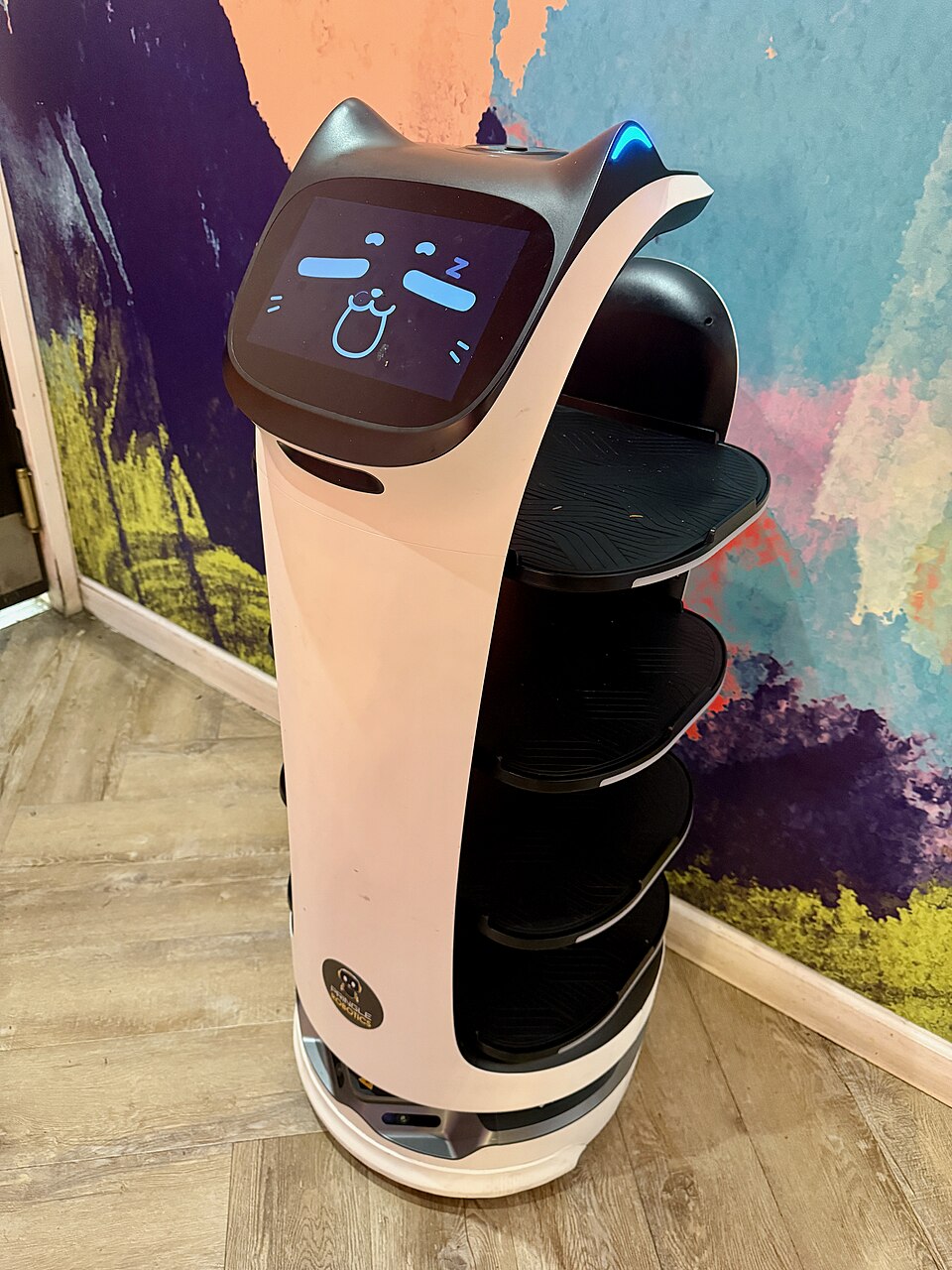
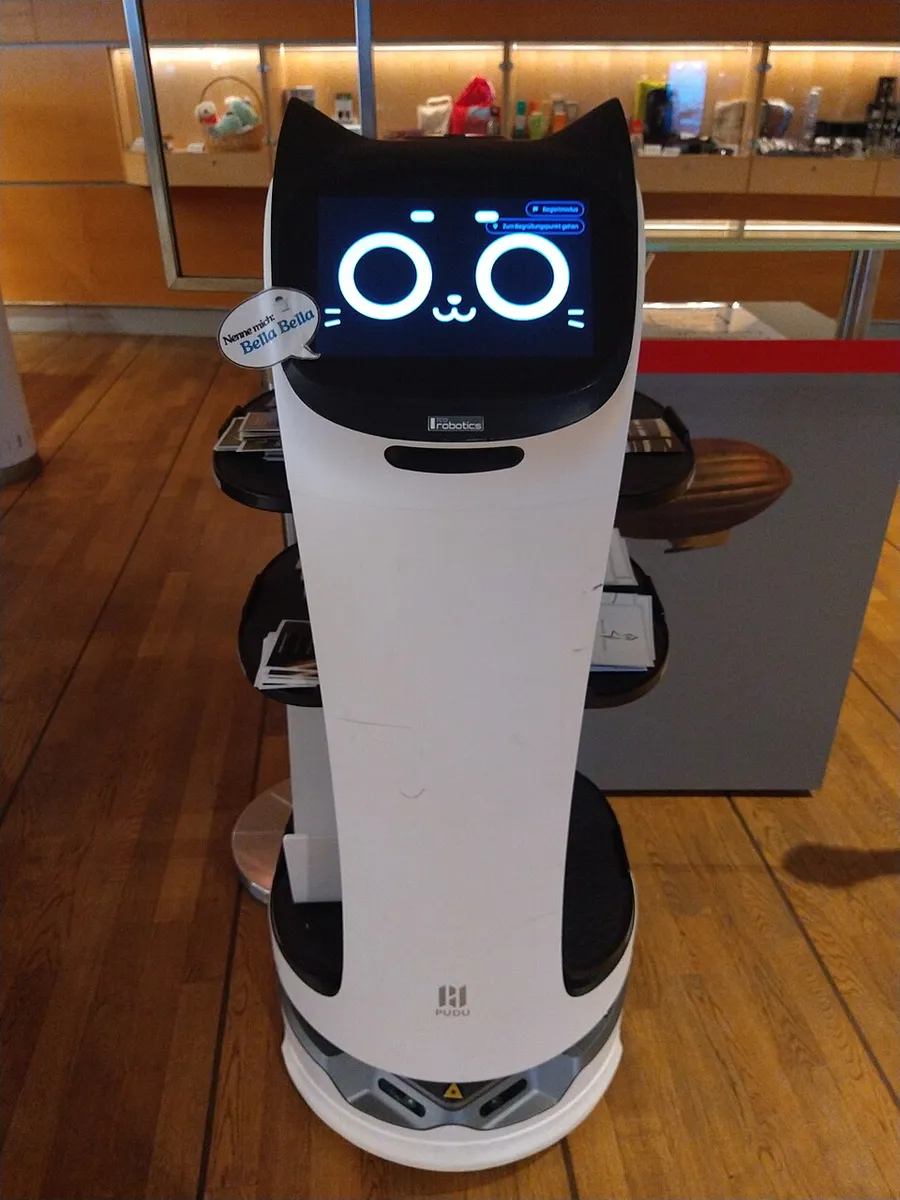
- Pudu BG1 Pro: ~฿1.2 to 1.8M
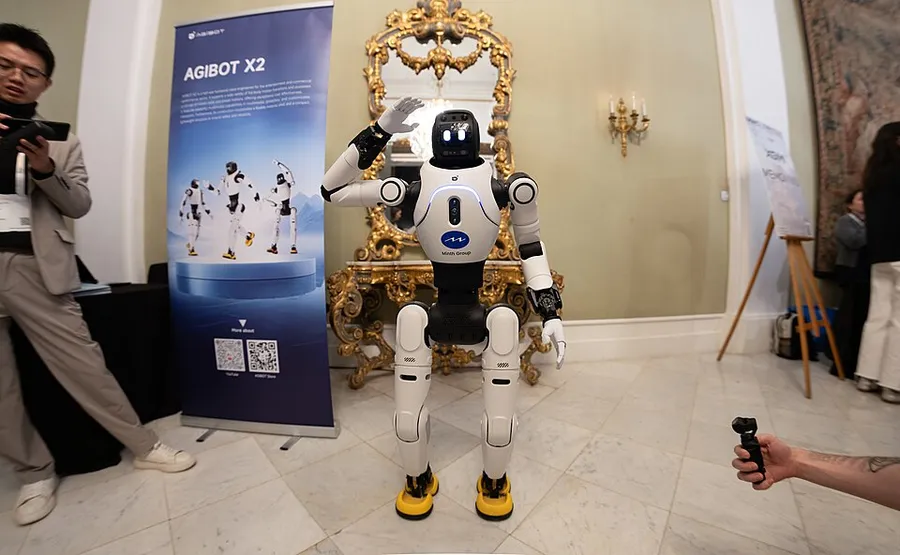
- AgiBot C5: ~฿1.5 to 2.0M
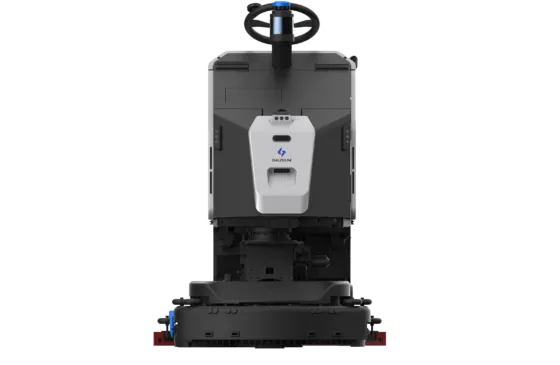
- Gaussian Robotics Scrubber 75: ~฿2.0 to 2.8M
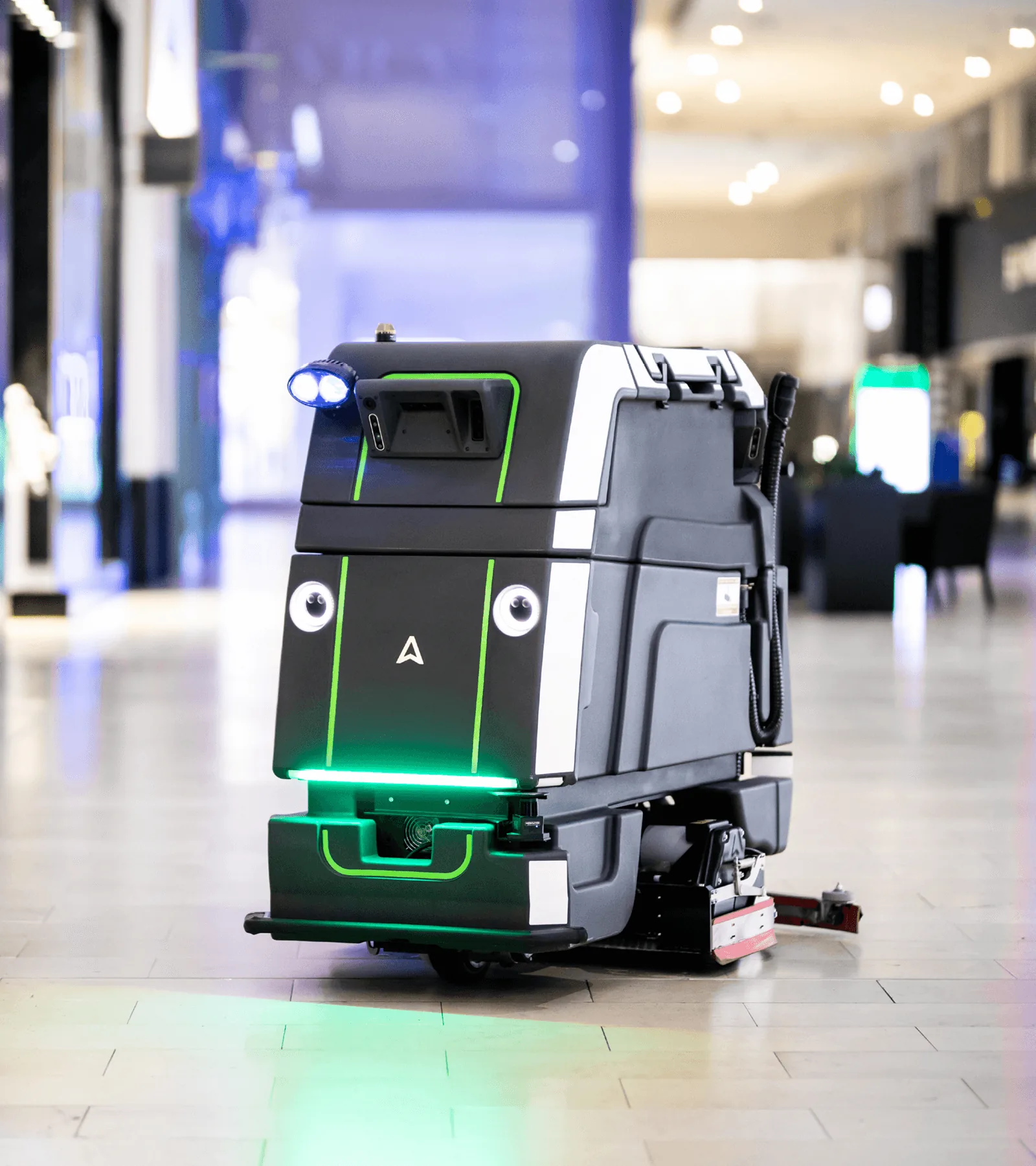
- Avidbots Neo 2: ~฿2.8 to 4.0M
Works well for: 30,000+ sqm e-commerce warehouses, MNC plants that need an audit log, large airports
Read the full details in our buyer’s guide to cleaning robots for Thai factories and warehouses.
Shortlisting Pudu, Gausium or AgiBot? Our side-by-side comparison of Pudu CC1, Gausium Phantas and AgiBot C5 covers specs, price and fit by floor size.
Factory Floor Scrubber vs Robot Scrubber Compared
| Criterion | Walk-behind | Ride-on | Robot |
|---|---|---|---|
| Price | 80K to 250K | 350K to 900K | 1.2M to 4M |
| Speed (sqm/hr) | 1,200 to 2,000 | 3,000 to 5,000 | 1,500 to 2,500 |
| Needs an operator | Yes | Yes | No |
| Runs 24/7 | Hard | Hard | Yes |
| Automatic audit log | None | Some models | Yes |
| Payback (30,000 sqm, incl. machine + chemical + pad) | 14 to 22 months | 18 to 24 months | 21 to 32 months |
The robot’s sweet spot: running 2-3 shifts, short on cleaning labor, needing an audit trail for ISO 9001 / IATF 16949 / GMP.
How an Electric Floor Scrubber Works
Every machine (walk-behind, ride-on, robot) works on the same three-step principle:
- Spray cleaning solution onto the floor from the machine’s clean-water tank
- Scrub with brushes or a pad driven by a rotary or orbital motor to work grime off the surface
- Vacuum the dirty water back up with a vacuum motor through a squeegee, leaving the floor dry and walkable right away
The only difference is human vs. autonomous. Technically, an electric scrubber doesn’t clean any better than a robot — the difference is in the navigation system and scheduling.
How to Choose the Right Floor Scrubber
Step 1: Measure the actual area
Measure the area you actually need to clean, not the whole factory footprint. Count only scrubbable hard floors (epoxy, polished concrete, vinyl, tile).
Step 2: Count cleaning passes per day
- 1 pass/day → walk-behind or outsource
- 2 passes/day → ride-on
- 3 passes/day + large area → robot
Step 3: Check the floor condition
Robots need a flat floor — ±5 mm over 3 m, with no raised edges above 20 mm. If the floor is uneven or has a lot of cracks, a ride-on is the safer bet.
Step 4: Calculate your current labor cost
- Cleaning labor cost per hour in Thailand: 60 to 100 baht
- 30,000 sqm × 2 passes = 60,000 sqm/day
- 4 to 6 workers × 8 hours × 90 baht = 2,880 to 4,320 baht/day
- Annual labor = 1.05 to 1.58 million baht
If labor exceeds 1 million/year, a robot starts to pay off; above 1.5 million/year, it’s a clear win.
Step 5: Trial before you buy
Every major brand offers a 1-3 day on-site demo so you can try before you decide. See for yourself whether the machine gets around corners, tables, and pallet racks, and how loud it actually is.
Renting vs. Buying a Floor Scrubber
If you’re not yet sure or your budget is tight, renting a floor scrubber is a solid option:
| Machine | Monthly rental | One-time purchase | 5-year lease |
|---|---|---|---|
| Walk-behind | 8,000 to 15,000 baht/month | 80,000 to 250,000 baht | 480,000 to 900,000 baht |
| Ride-on | 25,000 to 45,000 baht/month | 350,000 to 900,000 baht | 1.5 to 2.7 million baht |
| Robot | 50,000 to 90,000 baht/month | 1.2 to 4 million baht | 3 to 5.4 million baht |
Monthly rental wins when:
- Temporary use of less than 1 year
- You want to trial before buying
- You don’t want to handle maintenance yourself
- Budget won’t clear CapEx but will clear OpEx
Buying wins when:
- Long-term use of 3-5 years or more
- You have an in-house maintenance team
- You want to depreciate it as an asset
See our service: get advice on choosing the cleaning robot that fits your business.
Questions to Ask Before You Buy
- How many service centers does this brand have in Thailand? What’s the response time in hours?
- How often do the brushes/pads/squeegees need replacing (in hours)? What do the parts cost?
- Does this model come in a cold-storage edition (rated for -10°C)?
- Can it export a CSV audit log aligned to your ISO cycles?
- If it uses a brand-specific detergent, where do you order it, and what’s the chemical cost per sqm?
Conclusion
For Thai factories in 2026, mechanized floor-cleaning options fall into three clear tiers. Choose by floor area and number of cleaning passes — you don’t need a robot in every case. A plain electric scrubber is still the best value for areas under 15,000 sqm.
If you’re looking for autonomous cleaning robots across the full category — not just floor scrubbers, but also models for factories, warehouses, malls, airports, and hospitals — see the model overview, Thai-market prices, and selection criteria on the Cleaning Robot category page.
If you’d like help choosing, contact the YSAT team — the initial consultation is free.
Related FAQ
What's the difference between a floor scrubber and a robot scrubber?
A conventional floor scrubber (walk-behind or ride-on) needs an operator, while an autonomous robot scrubber runs on its own using LiDAR and camera navigation with no one at the controls. Right now the two differ in price by 2.5-4x, but a robot's ROI is faster if you run multiple shifts.
How much does a factory floor scrubber cost?
A 15-22 inch walk-behind starts at 80,000 baht, a 28-32 inch ride-on starts at 350,000-650,000 baht, and an autonomous robot scrubber runs 1.2-4 million baht depending on brand and capability.
How large does an area need to be to justify buying a floor scrubber?
A walk-behind pays off from 1,000 sqm up, a ride-on from 5,000 sqm, and an autonomous robot scrubber from 15,000 sqm and up when cleaning twice a day.
Can you rent a floor scrubber monthly?
Yes. Many major suppliers offer monthly rental — a walk-behind rents for 8,000-15,000 baht/month and a ride-on for 25,000-45,000 baht/month, including parts and service. It usually suits temporary jobs or trying it out before you commit to buying.
How many months until an autonomous robot scrubber pays for itself?
21-32 months for a 30,000-50,000 sqm facility cleaning across 2-3 shifts. Payback is fastest in e-commerce / 3PL warehouses and slowest in automotive plants with heavy oil and metal debris.