Pudu FlashBot Max
🇨🇳 Pudu Robotics · China
FlashBot Max is Pudu's multi-floor building delivery robot, launched 23 Oct 2024 — cloud elevator control with no lift modification (Pudu names KONE and OTIS), 2–4 adjustable compartments, 9 h runtime, 60 cm path clearance (no public price)
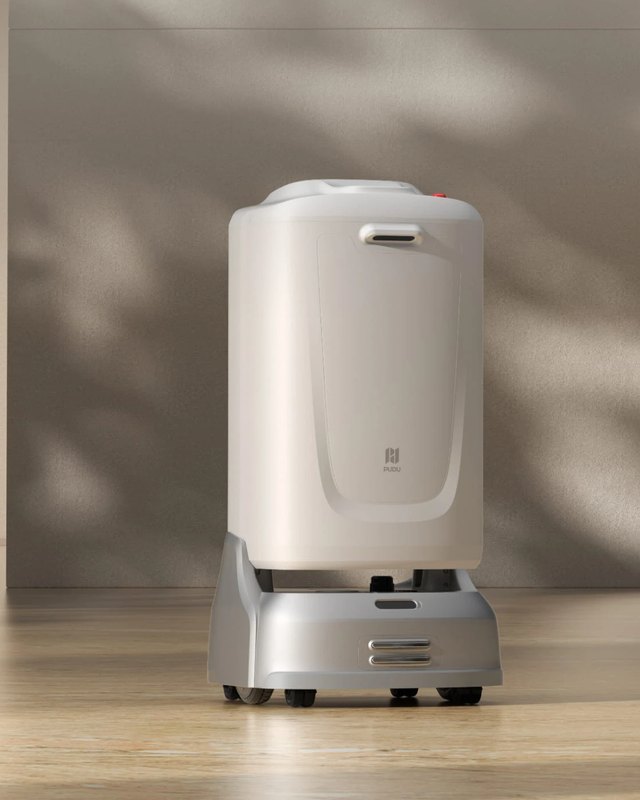
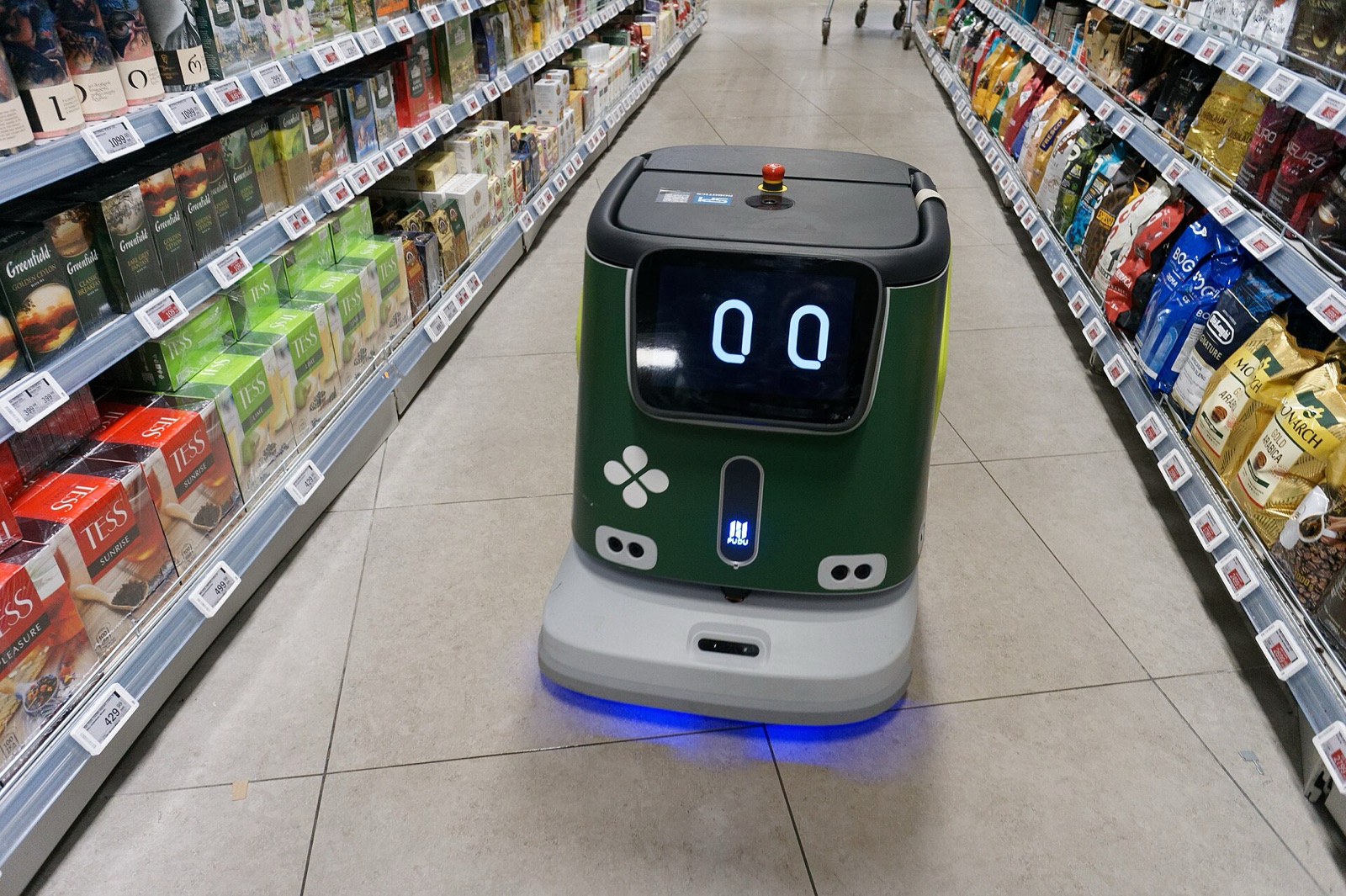
Official product render · pudurobotics.com
Key specs
- Weight
- 60 kg
- Height
- 1,052 mm
- Speed
- 1.2 m/s
- Battery
- 9 h
Common use cases
- ▸ Multi-floor hotel room service delivery
- ▸ Parcel and document runs in multi-storey offices
- ▸ Door-to-door delivery in condos and serviced apartments
- ▸ Supplies and consumables in hospitals and health centres
- ▸ Semi-outdoor resort routes: garden paths, poolside, fitness zones
Tags
Where the FlashBot Max sits in the FlashBot line
Pudu launched the current FlashBot generation on 23 October 2024, in a piece titled “Pudu Robotics Unveils the Latest Version of FlashBot” in its own newsroom — the same date the product page’s structured data carries as its releaseDate (2024-10-23). The problem the company states plainly: earlier building delivery robots were confined to indoor settings, leaving resort gardens, pool zones, open office terraces and hospital gardens unserved.
That generation splits into three variants — Pro / Max / Ultra — and the split is documented only on Pudu’s Chinese-language product page. The English page merges everything into one spec set. That matters when you read the numbers: several rows describe the series, not the Max specifically.
Verified specifications
Every row comes from the Product Overview table on Pudu’s own FlashBot Max page, except where another source is named.
| Item | Figure | Source |
|---|---|---|
| Dimensions (L × W × H) | 538 × 534 × 1,052 mm | pudurobotics.com FlashBot Max page |
| Weight | 60 kg | pudurobotics.com FlashBot Max page |
| Payload | 10 kg per layer | pudurobotics.com FlashBot Max page |
| Compartments | 2–4, adjustable (Max: up to 4) | pudurobotics.com · Chinese page, pudutech.com |
| Single compartment | 187 × 410 × 280 mm | pudurobotics.com FlashBot Max page |
| Double compartment | 380 × 410 × 280 mm | pudurobotics.com FlashBot Max page |
| Run-time | 9 h | pudurobotics.com FlashBot Max page |
| Charging time | 4 h | pudurobotics.com FlashBot Max page |
| Cruise speed | 0.5–1.2 m/s (adjustable) | pudurobotics.com FlashBot Max page |
| Navigation | VSLAM + Lidar SLAM (Max and Ultra) | pudurobotics.com · Chinese-page footnote |
| Path clearance | 60 cm | pudurobotics.com FlashBot Max page |
| Elevator control | Cloud (no lift modification; KONE and OTIS named) or Pudu’s own hardware solution | pudurobotics.com · launch release, 23 Oct 2024 |
| Compartment access | Password · phone-number digits · NFC (Max and Ultra) | pudurobotics.com · Chinese-page footnote |
| Compartment ventilation | Continuous in-compartment fan (Max and Ultra) | pudurobotics.com · Chinese-page footnote |
| Obstacle avoidance | 3D avoidance from multi-sensor fusion | pudurobotics.com FlashBot Max page |
| IoT devices it links to | Access control · e-gates · elevators · telephones · Bluetooth speakers | Pudu launch release (23 Oct 2024) |
| Recharging | Returns to the charging station on low battery | pudurobotics.com FlashBot Max page |
| Launched | 23 October 2024 | Pudu newsroom · releaseDate on the product page |
Specs with no public source: Pudu does not publish an IP rating, a screen size (the page only says “large screen”), battery capacity in Ah or Wh, a whole-robot payload (only 10 kg per layer), threshold-crossing height, groove-crossing width, gradeability, noise level, or the sensor or lidar hardware used. Worth noting: the company does publish some of these for its own other models — T300 has both a 20 mm threshold height and a 35 mm groove width — but not for the FlashBot Max. We leave them blank rather than estimate.
The selling point is the lift, not the robot
Most in-building delivery robots run into the same wall: they cannot use the lift, so someone has to stand there and press the button, which deletes most of the reason to buy one. What Pudu sells here is taking the person out of that step — a cloud solution the company states requires no elevator modification and is compatible with KONE and OTIS, plus Pudu’s own hardware elevator control for buildings where the cloud route does not fit.
The robot also links to other building systems: access control, e-gates, telephones and Bluetooth speakers, per the launch release. For multi-floor coverage, Pudu says the PUDU Mapping Tool replicates maps across floors quickly.
What to check before committing: Pudu publishes no list of supported lift models, no cost for the elevator-control module and no technical prerequisites for either option. “Compatible with KONE and OTIS” is a brand-level statement, not a model-level one — and plenty of older lifts in Thai buildings have no interface a cloud service can talk to.
Pudu’s own documents disagree on 60 cm versus 70 cm
The launch release of 23 October 2024 says “Its 70cm width navigates narrow corridors and diverse elevators with ease.” The current product page markets a “60cm Path Clearance” headline and lists the machine width as 534 mm.
We do not know whether the product changed or the older document simply was not updated, and Pudu does not explain it. Practically: do not size a real lift or corridor off either number. Ask for the figure the manufacturer will warrant in writing, then measure the narrowest lift door on the actual route against it.
Who should skip this one
- Single-storey sites, or lifts that cannot be integrated. The value of this model is the floor change. If the route has no lift, or building management will not allow lift integration, you are paying for a feature you cannot use.
- Large or heavy items. The biggest double compartment is 380 × 410 × 280 mm and payload is 10 kg per layer. Bulk parcels, water drums and linen trolleys are not its job — for heavy in-building or in-plant transport see T300 (300 kg) or T150.
- Restaurant food running. The FlashBot Max is a locked cabinet, not an open tray a server can clear in one motion. Front-of-house serving is what BellaBot, KettyBot and PuduBot 2 are for.
- Genuinely outdoor routes. Pudu says semi-outdoor and publishes no IP rating. If the path is exposed to rain, do not assume.
- Tender or TOR paperwork. IP rating, screen size, battery capacity, total payload and threshold capability have no public figures from Pudu for this model. If your document requires them, get written confirmation from the distributor first.
On price
Pudu announces no price for the FlashBot Max on either the English or the Chinese page — the product page carries only “Contact Us” and “Request a Demo”, and the structured data on that same page defines the page action as “Request a Quote”.
In Thailand, as of 6 August 2026, we found no baht price on any Thai seller’s own website. Resellers that list the model (for example Numchai Robot) publish product detail with no figure. So we leave the price range off this page, we do not convert a foreign price into baht, and we do not quote marketplace listings.
See the rest of the category at service robots, the same brand’s cleaning line at CC1 Pro and MT1 Max, its inspection platform at D5, or the full range at Pudu Robotics.
Sources
- FlashBot Max — official product page, pudurobotics.com
- FlashBot Max — official Chinese-language product page, pudutech.com (carries the Pro / Max / Ultra footnotes)
- Pudu Robotics Unveils the Latest Version of FlashBot, Elevating Smart Building Delivery to a New Level — Pudu newsroom (23 Oct 2024)
- The same release on PR Newswire (23 Oct 2024)
Frequently asked questions
How much does the Pudu FlashBot Max cost? +
As of 6 August 2026 there is no citable public price. Pudu's own FlashBot Max page lists no price — only "Contact Us" and "Request a Demo" buttons, and the structured data on that page defines the page's action as "Request a Quote". In Thailand, resellers that list the model (for example Numchai Robot) publish product detail but no baht figure on their own site. We therefore leave the price range off this page, do not convert a foreign price into baht, and do not quote marketplace listings. A real number has to come from a distributor quote.
How is the FlashBot Max different from the FlashBot Pro and Ultra? +
Only Pudu's Chinese-language product page (pudutech.com) separates them. Compartments: the Pro adjusts to a maximum of 3, the Max and Ultra to 4. Navigation: the Pro uses laser SLAM alone, while the Max and Ultra use VSLAM+ together with laser SLAM. Footnotes on that page state that VSLAM+ semi-outdoor positioning, NFC compartment unlocking and compartment ventilation are Max/Ultra only. The version-comparison table on the same page answers Max versus Ultra as well: the Ultra adds in-compartment UV disinfection (紫外灯消毒) and in-compartment photo capture (舱内拍照), neither of which the Max has. Every other row — 2–4 compartments, VSLAM+ with laser SLAM, NFC, ventilation, semi-outdoor use — is identical between the two.
Does the building's lift need to be modified? +
Pudu states on the product page that the cloud elevator control solution "requires no elevator modifications" and is compatible with leading brands like KONE and OTIS, with a self-developed hardware elevator control solution as the alternative for buildings the cloud route does not suit. The company publishes no list of supported lift models, no installation cost and no technical prerequisites for either option — a site survey of the actual lifts comes first.
How much can the FlashBot Max carry? +
Pudu's Product Overview table gives payload as 10 kg per layer (22.05 lbs/layer) and nothing else. No whole-robot payload figure is published, so we do not state one and we do not multiply it out ourselves — the compartment count is adjustable between 2 and 4 and Pudu has not confirmed that the total equals 10 kg times the number of layers. The published compartment sizes are 187 × 410 × 280 mm (single) and 380 × 410 × 280 mm (double).
Can it work outdoors? What is its ingress rating? +
Pudu positions the FlashBot Max for semi-outdoor work — garden corridors, fitness zones and poolside areas — not full outdoor use, and the company publishes no IP rating for it on either the English or the Chinese page. If your route is exposed to rain or harsh sun, get a written ingress specification from the distributor rather than inferring one from the word "semi-outdoor".
Related
Brand
🇨🇳 Pudu Robotics
Shenzhen-based robotics maker that started with restaurant service robots (BellaBot) and has expanded to four product lines, most recently entering manufacturing with the T150 (150 kg payload industrial AGV).
Category
Service Robots for Commercial Use
Autonomous service robots for F&B, hotels, hospitals, and warehouses, food serving, in-room delivery, supply transport, document delivery with elevator/IoT integration.