service-robot
Service Robots for Commercial Use
Autonomous service robots for F&B, hotels, hospitals, and warehouses, food serving, in-room delivery, supply transport, document delivery with elevator/IoT integration.
Thai market range ฿250,000–1,500,000
Common use cases
- ▸ Restaurants / hotpot / buffet
- ▸ Hotels / resorts (in-room delivery)
- ▸ Hospitals (medication, linen, food trays)
- ▸ Office buildings (document delivery)
- ▸ Warehouses / distribution centers (heavy load)
- ▸ Shopping malls / retail (greeter, info)
Commercial Service Robots
Service robots work in human-occupied spaces serving customers or moving items, distinct from industrial robots in closed cells, and from AGV/AMRs in pure warehouse/factory contexts.
Main categories
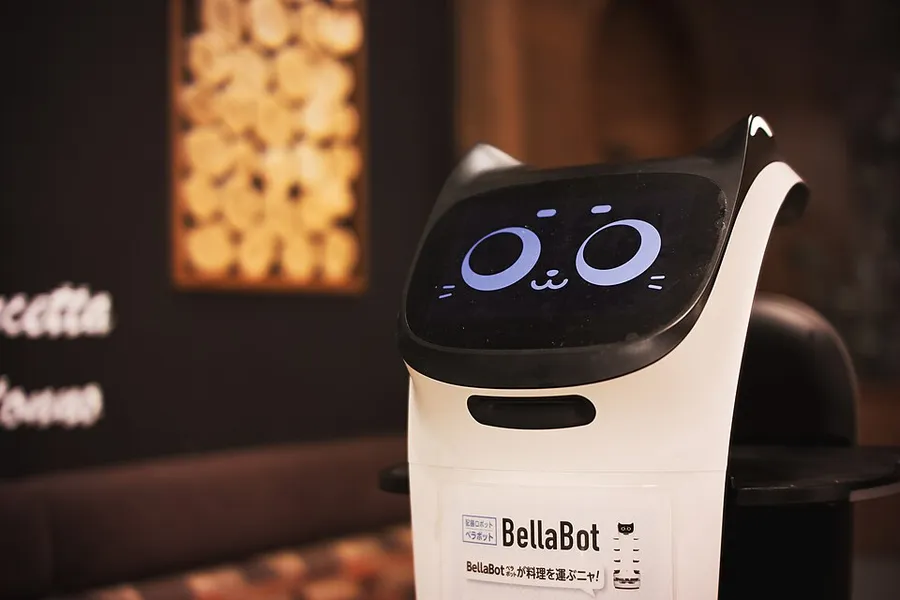
1. F&B Delivery
- Common at buffet, hotpot, and casual dining chains in Thailand: MK, Coca, Sukishi, Yayoi
- 3–4 trays × 10 kg/tray
- Top models: Pudu BellaBot Pro, Keenon Dinerbot T10
- ~฿250,000–450,000
2. Hotel/Hospital Delivery
- In-room delivery, medication, linen, documents
- Multi-floor with elevator IoT integration
- Models: Keenon Butlerbot W3, Pudu BellaBot, Aethon TUG
- ~฿500,000–800,000
3. Heavy-Load Delivery (warehouse/factory)
- 50–150 kg payload
- Manufacturing or healthcare logistics
- Models: Pudu T150, Keenon Courier S100
- ~฿800,000–1.5M
4. Reception / Greeter
- Greeting, Q&A, way-finding
- Models: Pepper (Aldebaran), UBTech Cruzr
- ~฿800,000–1.5M
Popular models: food-serving robots in Thailand
| Model | Brand | Type | Trays / Payload | Estimated price |
|---|---|---|---|---|
| BellaBot Pro | Pudu | F&B delivery | 4 trays × 10 kg | ฿380,000–480,000 |
| Dinerbot T10 | Keenon | F&B delivery | 4 trays × 10 kg | ฿380,000–480,000 |
| KettyBot | Pudu | F&B + ads display | 2 trays + display | ฿280,000–380,000 |
| Dinerbot T8 | Keenon | F&B mid-range | 3 trays | ฿320,000–420,000 |
| Dinerbot T6 | Keenon | F&B entry | 3 trays | ฿270,000–360,000 |
| Butlerbot W3 | Keenon | Hotel/hospital | multi-floor, IoT lift | ฿500,000–700,000 |
| T150 | Pudu | Heavy-load delivery | 150 kg | ฿800,000–1.2M |
Prices are Thailand market estimates for 2026 including basic installation and training — not a formal quotation.
Service Robot vs AGV/AMR
| Service Robot | AGV/AMR | |
|---|---|---|
| Environment | Human-occupied (restaurants, hotels) | Factory/warehouse (closed) |
| Payload | 10–150 kg | 100–1,500 kg |
| Interaction | UI + voice + customer touch | Minimal/none |
| Navigation | SLAM + dynamic human avoidance | Grid/path/SLAM |
| Price range | ฿250K–1.5M | ฿800K–3M |
ROI in a Thai restaurant
Mid-size buffet (60 tables) using 2 Dinerbots:
- Server wages: 6 × ฿16,000 = ฿96,000/month
- Robot capex: 2 × ฿380,000 = ฿760,000 one-time
- Reduce to 3 servers → save ฿48,000/month
- Payback ~16 months
Plus:
- 12–24 hour daily operation, no breaks
- No no-shows, no turnover
- Customer engagement (kids/teens taking photos with the robot)
Features to look for
- Auto-charging dock
- Multi-tray with privacy compartments (essential for hotel/hospital with locks)
- Elevator IoT integration
- Voice + multilingual UI
- Cloud fleet management
- 24/7 SLA support, critical for F&B; spare parts must arrive same-day
Practical considerations
- Floor must be smooth, no edges >15 mm
- Wi-Fi coverage on every floor
- Doorways >80 cm
- Customers + children present → emergency stop + 360° obstacle detection mandatory
- Battery life ~3–5 years (replacement available locally or via Shenzhen)
Choosing a brand
Independent, side-by-side comparisons: Pudu vs Keenon · Pudu alternatives · Keenon alternatives