
5-Step Robot Selection Guide for Thai Factories (2026)
A practical framework for picking the right robot type and brand for your factory, from identifying candidate tasks to calculating payback.
Why you need a process
Thai factories typically buy robots based on sales distributor recommendations, and every distributor pushes their own brand. The result:
- Over-specified robots (paying too much)
- Under-specified robots (doesn’t work in practice)
- ROI that misses forecast by a wide margin
Here’s a 5-step framework for picking systematically.
Step 1, Pick the candidate task (process selection)
The 3D rule
- Dull, repetitive motion humans get bored doing (palletizing, pick & place)
- Dirty, dust, oil, chemicals (foundries, painting)
- Dangerous, high injury risk (press brake, welding)
Volume matters
- > 1,000 parts per shift → worth automating
- Multi-shift operation → even low volume pays back quickly (3× labor cost)
Step 2, Define technical requirements
Payload
Total weight of part + end-of-arm tool. Don’t forget the gripper itself is 5–15 kg.
Reach
Distance from robot base to the farthest work point + 200 mm safety margin.
Speed & cycle time
- 30 picks/min → SCARA or Delta
- 10–20 picks/min → 6-axis articulated
- < 10 picks/min → cobot works
Repeatability
- Electronics assembly → ±0.02 mm (SCARA)
- General pick & place → ±0.05 mm (6-axis)
- Palletizing → ±0.5 mm (any robot)
Step 3, Choose the robot type
| Task | Best robot class |
|---|---|
| High-speed food pick & place | Delta |
| Electronics assembly | SCARA |
| Machine tending, welding, 3D assembly | 6-axis articulated |
| Working next to humans, SME | Cobot |
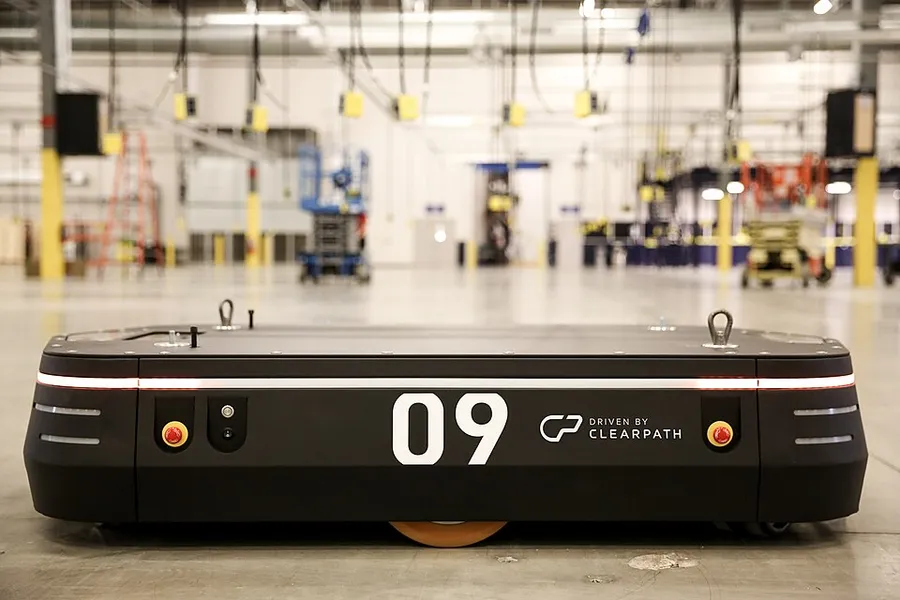
| Material transport between cells | AGV / AMR |
| Heavy-case palletizing | 4-axis palletizer |
Step 4, Pick the brand
Three factors rank highest:
- Service network in Thailand, FANUC, ABB, Yaskawa, Mitsubishi have direct branches with fast response
- Ecosystem, UR has 300+ URCaps, ideal if you’ll swap end-of-arm tools frequently
- Budget, Estun, JAKA, Dobot cost 30–50% less than the Big 4 but service may be slower
See our brand comparison page for the full matrix.
Step 5, Calculate ROI
The formula
Payback (months) = Total investment ÷ Monthly savings

Total investment = robot + EOAT + integration + training + safety
Monthly savings = (labor + defect reduction + downtime reduction) - (maintenance + utilities)
Example
Thai beverage plant palletizing:
- Investment: ฿3,500,000
- Labor saved: 6 workers × ฿25,000/month = ฿150,000/month
- Defect reduction: ฿30,000/month
- Payback: 3,500,000 / 180,000 = 19.4 months (1.6 years)
Pre-contract checklist
- Proof-of-concept demo with your actual parts
- Warranty covers parts + labor for 1+ year
- Training for at least 2 maintenance engineers
- Spare parts list + MTBF
- Service response SLA (< 24–48 hours)
Related FAQ
Which tasks are best for robotic automation?
Tasks that are dull, dirty, or dangerous (the 3Ds), palletizing, welding, machine tending, material handling in hot or cold environments. High-volume repetitive work with consistent part geometry is ideal.
What's a good first robotics project?
Palletizing or machine tending. Both have clear, predictable ROI (1.5–2.5 year payback) and integration complexity lower than welding or painting.
What's the minimum budget for a first automation project?
Roughly ฿1.5M–฿2.5M for a basic robot cell including hardware, end-of-arm tool, integration, and training. Cobots for SME use can start at ฿800K–฿1.2M.