agv-amr
AGV / AMR Mobile Robots
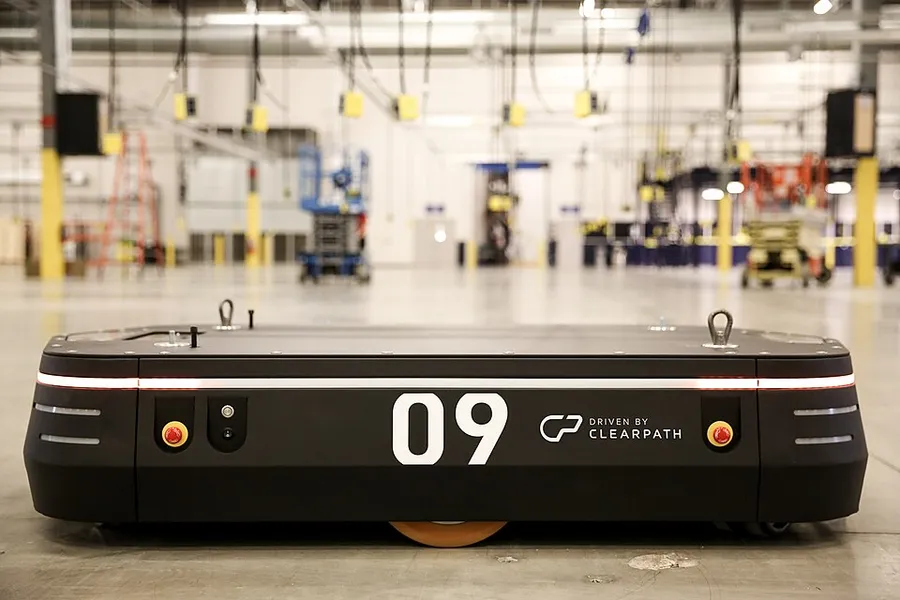
Automated material transport for factories and warehouses. AGVs follow fixed paths; AMRs navigate dynamically via SLAM.
Thai market range ฿800,000–5,000,000
- Payload
- 100–3000 kg
Common use cases
- ▸ Material transport between work cells
- ▸ Warehouse picking (e-commerce, 3PL)
- ▸ Just-in-time line-side delivery
- ▸ Pallet transport
- ▸ Hospital logistics
AGV vs AMR, what’s different
| AGV | AMR | |
|---|---|---|
| Navigation | Magnetic tape, QR codes, laser reflectors | SLAM (onboard LiDAR + IMU) |
| Obstacle handling | Stops and waits | Re-plans path around obstacle |
| Up-front cost | Lower | Higher |
| Changing the layout | Hard (re-tape floor) | Easy (remap in software) |
| Best fit | Static layout, predictable traffic | Dynamic warehouse, mixed human/robot traffic |
Where they run in Thailand
Automotive and electronics plants in the Eastern Seaboard (TOYOTA, AAT, WD, Seagate) have used AGVs for years. E-commerce warehouses around Bangkok (Lazada, Shopee, JD Central) are now adopting G2P (goods-to-person) AMR fleets, Geekplus and Quicktron are the main vendors.
What to check before ordering
- Floor flatness, typically ±3 mm in 3 m. Expansion joints over 5 mm can halt a fleet.
- Wi-Fi coverage, full coverage with seamless AP handoff (under 100 ms). One AP per ~400 m² is the rule of thumb.
- Safety, ISO 3691-4 compliance is mandatory; pedestrian zones must be explicitly defined.
- Software integration, WMS, MES, and ERP handshakes are where most implementations stall. Budget 30–50% of the hardware cost for software work.
Thai market pricing (2026)
| Class | Range |
|---|---|
| Small AGV (500 kg payload) | ฿800K–฿1.2M |
| Mid AGV (1,500 kg payload) | ฿1.2M–฿2.0M |
| AGV forklift | ฿2.5M–฿4.5M |
| AMR (100–300 kg) | ฿1.5M–฿2.5M |
| AMR (500–1,500 kg) | ฿2.5M–฿4.5M |
| G2P warehouse solution (20+ robots) | ฿15M–฿40M |